
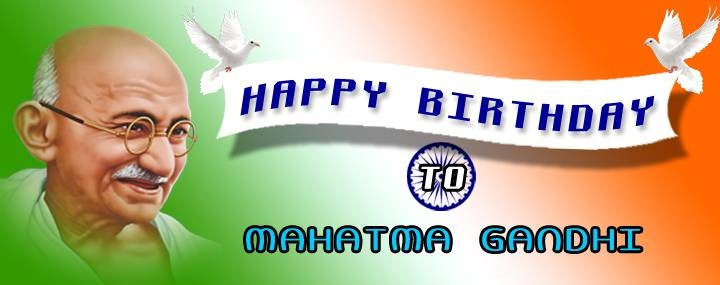
The historical record of world events contains only a few individuals who achieved the level of importance and influence that Mohandas Karamchand Gandhi attained. The Mahatma title, which means “great soul”, describes his life, which showed how strong beliefs can empower people to keep fighting through all difficulties. He achieved more than his role as a political leader because his non-violent resistance approach created a new understanding of justice and freedom, which transformed international debates. This tribute examines the various stages of life that the leader who brought Indian independence experienced, while his principles now serve as guiding lights for all people.
The Life and Values of Mahatma Gandhi: A Journey of Truth and Non-Violence

Gandhi developed his philosophical system through his personal life experiences and his deep inner reflection. The events of his early existence did not stand out until his experiences as a young attorney in South Africa brought about his most important life development. He started creating his two main life principles, Satyagraha and Ahimsa, after he witnessed the extreme violence of racial discrimination.
Gandhi regarded truth (Satya) as his supreme guiding concept, which he considered an ultimate truth that matched God’s existence. “The Story of My Experiments with Truth” presents his life story. He pursued a lifelong mission to find God through his investigation of truth. This represents an active way of knowing the world through direct experience. Satyagraha exists as a method for people to live their truth through their practice of love and nonviolent resistance against unjust laws. The process enabled one to change their adversary because it used nonviolent methods to make the opponent experience suffering while refusing to fight back.
Gandhi adopted Ahimsa from Indian religious beliefs, which he developed into an extensive system that prohibited all forms of harm, including mental, verbal and physical actions. He believed that weak people used violence while strong people maintained nonviolent behaviour. For Gandhi, nonviolent resistance served as a way to showcase bravery, which functioned as a moral weapon that could defeat any opponent. His ascetic practices, including wearing only the simple khadi loincloth, fasting and practising self-reliance (Swaraj), showed his belief systems through his behaviour that true strength comes from moral purity and self-restraint instead of material wealth and physical dominance.
Gandhi’s Role in India’s Freedom Struggle and His Lasting Impact
Gandhi took advantage of his comeback trip to India in 1915 to radically change the Indian National Congress. Initially, the Congress was a small debating club of the elite, but Gandhi turned it into a popular movement that brought together people of all social classes. In fact, it was his ability to simplify the most complicated philosophical ideas into effective political actions that touched the hearts of millions. He was both a master political strategist and a spiritual leader at the same time, uniting all the people of India to fight against the power of the British Empire.
His leadership gave birth to some of the most well-known resistance events that have gone down in history. During the Non-Cooperation Movement (1920- 22), Indians boycotted British goods, courts, and schools on an unprecedented scale as a protest against the British. The Dandi March or Salt March (1930) was a powerful act of symbolic protest that used moral symbolism to get across the message. He walked 240 miles to the Arabian Sea to make his own salt; it was his way of challenging the British salt tax. He revealed the truth of colonial rule through his simple yet strong demonstration. The event of this single moment created a worldwide impact and showed how civil disobedience could succeed.
In the Quit India Movement of 1942, Gandhi started with his “Do or Die” call, which represented the last national effort to remove British control from India. The experience of Partition, together with the resulting communal conflicts, caused him deep sorrow during his last years, although he wanted India to remain united. His enduring influence has become impossible to dispute. He achieved India’s liberation through forceful resistance against foreign rule, while he inspired his fellow countrymen to recognise their national power and their ethical responsibilities.
Why Mahatma Gandhi’s Ideals Still Matter in the Modern World
Gandhi’s principles maintain their significant importance more than 70 years after his 1948 assassination. His philosophy provides an effective solution to the modern world, which faces global conflicts, social injustice and environmental emergencies. His teachings about non-violent resistance inspired the American Civil Rights Movement led by Dr Martin Luther King Jr. and the anti-apartheid struggle, whom Nelson Mandela guided.
His belief in Swaraj (self-rule) extends to all aspects of human existence, including political power, economic resources and environmental protection. The future of local self-reliant communities, which he established through his research about industrialism and consumerism, stands as his prophetic vision. His advocacy for a simpler way of life shows increasing relevance because we face both climate change and permanent environmental damage. Mahatma Gandhi dedicated himself to serving India, and he became a universal gift that benefited all humankind. He showed that a single man with only a staff and strong moral values could defeat an empire and motivate the entire world. His life serves as a guide that shows us that achieving a fairer and peaceful world requires truth and non-violent efforts instead of military conflict.

To honour Mahatma Gandhi’s enduring principles, people in modern society should express their regard and friendship through gifts that create community bonds. Winni’s flowers create an elegant bouquet that shares peace, while the delicious cakes and elegant gift hampers enable colleagues and loved ones to connect with each other. The people who perform these religious acts transform their gifts into communal remembrance experiences, which maintain the peacefulness and goodwill that form the core of Gandhi’s extensive legacy.


